The animals that went underground became the Otherkind. The ones that stayed on the surface followed a different path.
Curse dust and the environments it settled into changed surface life over generations. These creatures belong to their habitats. Their bodies should feel strange, but still capable of moving, sensing, and feeding in the places they inhabit.
Start with the place
Our creature studies begin with a question: what would it take to live here?
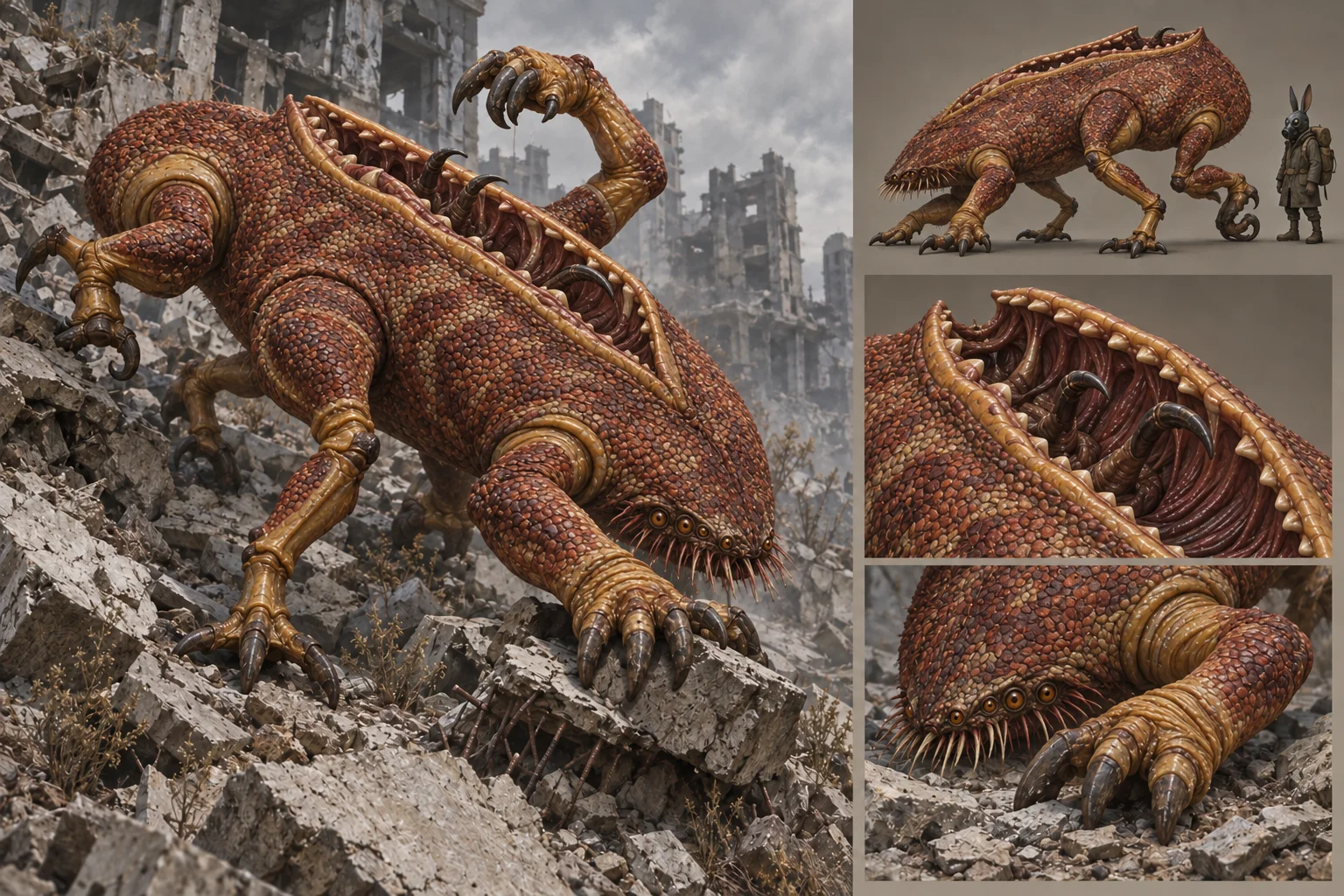
A flooded building suggests clinging limbs, wet membranes, and ways to move through water. A broken slope of dry rubble calls for grip, a low center of gravity, and joints that can take the strain.
The creatures grow out of those needs. Familiar parts of animal and insect anatomy come together in unexpected ways, without becoming machines or simply larger versions of ordinary animals.
Life among the ruins
The rust-red creature in this study has several points of support, claws that catch on stone, and a mouth opening along its back. Its hardened amber joints and rough scales distinguish it from the creatures imagined for wetter spaces.
The direction is established; the individual is still a concept. Its final anatomy, name, behavior, and abilities remain work to be done.
Exploring PvE
These studies are part of our PvE direction. They help us explore what lives beyond the underground cities and what a return to the surface might bring you face to face with.
Our first gameplay focus is still tactical PvP. PvE encounter details and release plans have not been announced. We’ll share the work here as the creatures, environments, and encounters take shape.
For the people venturing into that world, meet Patch.